
The Manitoba government’s 2025-26 second quarter report shows climate change-driven wildfires and droughts, as well as the economic slowdown from President Donald Trump’s tariffs have had an impact on the province’s bottom line.
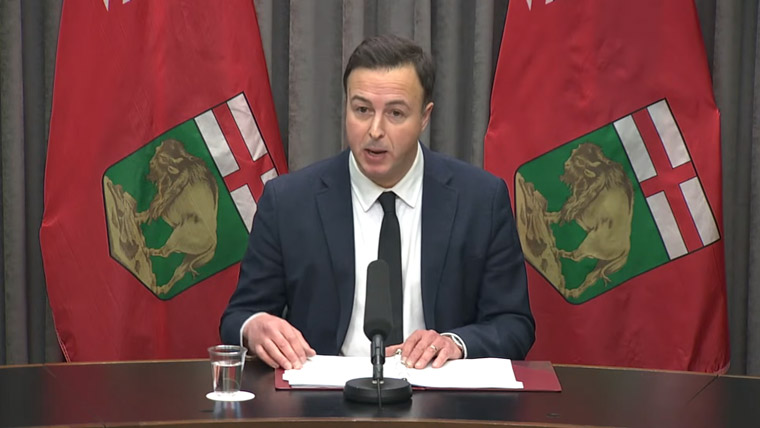
“Climate change and Donald Trump’s tariffs have had an impact on Manitoba’s bottom line. But our fiscal path is clear and we’re committed to balancing the budget,” said Finance Minister Adrien Sala. “Aside from the pressures of drought and wildfires, we would be within our deficit targets. That means we’re responsible and we have a plan. We’re going to stay on our path and keep delivering for Manitobans.”
Excluding the net costs of wildfires and Manitoba Hydro’s variance, the deficit would be $803 million, which is just slightly above Budget 2025’s $794 million projection. The 2025-26 second quarter fiscal update projects an $867 million variance from the deficit forecast relative to the 2025-26 Budget, which now sits at $1.661 billion. The increase is attributed to $324 million in additional costs related to wildfire suppression and evacuation efforts, as well as historic drought conditions which created a negative variance of $684 million for Manitoba Hydro relative to the budget.
Tariffs, trade uncertainty and economic risks associated with the wildfires have slowed forecast gross domestic product (GDP) growth to 1.1 per cent from 1.7 per cent. Budget 2025 projected tariffs could reduce the GDP by as much as 3.8 per cent, or $3.6 billion. However, Manitoba’s economy has been resilient so far in 2025, with growth primarily fueled by strong household spending, the minister noted, adding the province’s diversified economic structure is protecting Manitobans from tariffs from the United States.
Manitoba saw an increase of 4.2 per cent in average hourly wages as of November. This is a sign more families are enjoying bigger pay cheques and helping to drive our economy, the minister noted.
The second quarter report for the 2025-26 fiscal year can be viewed online at gov.mb.ca.