
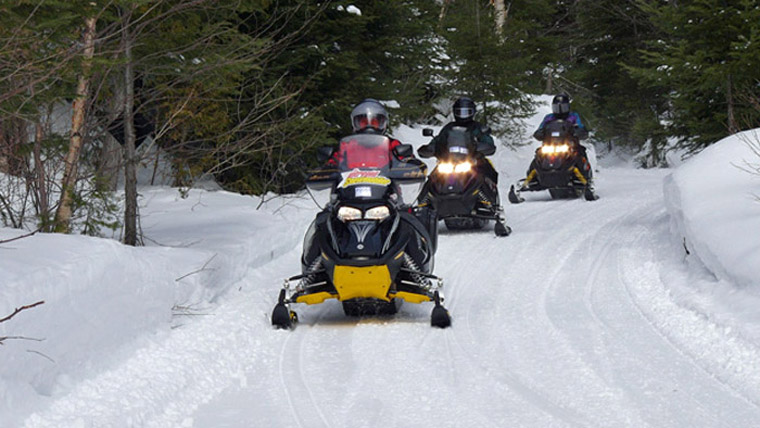
Snowmobilers are being reminded to take the necessary precautions to stay safe while out on the trails this winter. This includes wearing helmets and other safety equipment, controlling their speed, driving sober and sticking to signed and groomed trails.
Manitoba RCMP, Manitoba Public Insurance (MPI) and Snowmobilers of Manitoba (Snoman) are issuing the reminder ahead of International Snowmobile Safety Week, which begins on Saturday.
“Winter is a wonderful time of year for snowmobilers to hit the trails and enjoy the season, but we strongly urge everyone to ride safely,” said RCMP Staff Sgt. Matt Lavallee, who teaches snowmobile safety courses to RCMP members. “Snowmobilers need to ride in a responsible manner so that everyone returns home at the end of the ride.”
Lavallee noted that all riders, under law, must wear an approved snowmobile helmet when on their machine and that all riders under the age of 14 must be under adult supervision. He said RCMP officers are on the trails throughout the province and will enforce laws as necessary.
Twenty-eight snowmobile-related deaths have occurred over the past six years, including four in 2025. Speed was a contributing factor in many of those 28 deaths, as was alcohol impairment, improper or no helmet use, driver inexperience and careless driving.
“January and February have the highest fatality rates among snowmobilers in Manitoba, so it is very important to continue to have conversations to educate riders about snowmobile safety,” said Maria Campos, vice-president and chief customer and product officer for MPI. “We work hard to reduce fatalities by standing together with our partners, like the RCMP and Snoman, to highlight the things riders can do to protect themselves, such as slowing down, wearing a helmet, and riding sober. Snowmobiling is great fun and a fantastic way to enjoy Manitoban winters, so let’s keep it fun by staying safe.”
There are a number of things riders can do to mitigate the risk and stay safe before they even hit the trail, such as:
- Checking your snowmobile before leaving for any mechanical issues, including brakes, lights, fuel levels and engine performance;
- Bringing along a fully charged cell phone, first-aid kit and essential repair tools, such as a spare belt, pull chord and spark plugs;
- Planning routes ahead of time and sharing travel details with someone at home; and
- Wearing warm, layered clothing, insulated gloves, a windproof jacket, snowpants and a snowmobile helmet that’s been properly fitted.
Once out on the trails, riders should:
- Maintain a safe speed, stay alert, and be courteous to other riders;
- Dress appropriately for conditions and safety, including wearing a helmet at all times;
- Watch for hidden obstructions like rocks, fences, culverts, guywires and abrupt terrain changes beneath the snow;
- Cross highways and roads safely and in compliance with local laws; and
- Drive sober.
“The safety of riders is of utmost importance to our organization,” said Joe Thievin, a vice-president with Snoman. “Riders need to drive to their level of ability and not consume alcohol or drugs before or while out on the trails and take all the necessary precautions to ensure their safety and that of other riders so they can ride again.”
MPI collects a $25 non-refundable annual fee on all off-road vehicle registrations on behalf of the Government of Manitoba to support trail maintenance and development, off-road vehicle safety education and training programs, and rehabilitation of public lands impacted by off-road vehicle use.
Purchasing a Snopass to ride on 13,000 kilometres of designated provincial trails helps Manitoba invest in grooming and maintaining trails, which contribute to snowmobile safety.