
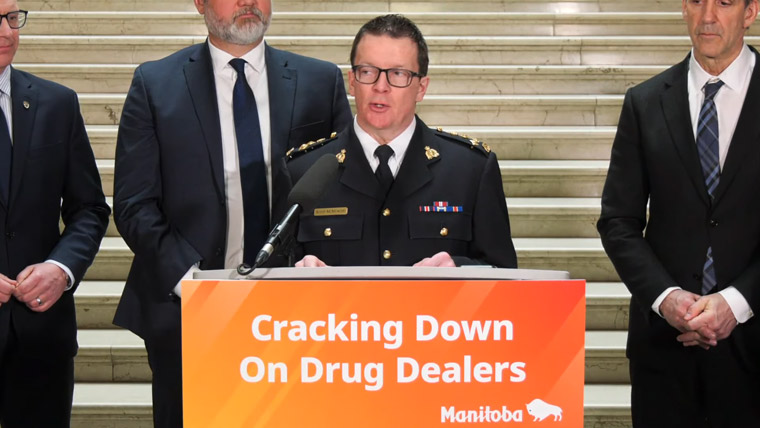
The Manitoba government is announcing the creation of the Manitoba Organized Crime and Drug Trafficking Task Force to strengthen the response to the trafficking of methamphetamine, fentanyl, cocaine and other illicit drugs, which continue to threaten community safety.
“Manitobans have been clear, the meth crisis needs to end and the people profiting off of creating misery in our communities need to be held to account,” said Justice Minister Matt Wiebe. “This task force will provide law enforcement in Manitoba access to the best minds and practices in Canada when it comes to fighting back against drug trafficking and organized crime.”
The task force will include senior leadership from:
- Manitoba Justice;
- Royal Canadian Mounted Police;
- Canada Border Services Agency;
- Manitoba Criminal Intelligence Centre;
- Winnipeg Police Service;
- Brandon Police Service;
- Manitoba First Nations Police Service; and
- Altona, Winkler and Morden police services.
Kevin Brosseau, Canada’s fentanyl czar, will advise the task force. During its first meeting today, members will share local experiences, set priorities and work toward a provincewide drug enforcement strategy focused on disrupting supply chains including a targeted meth sweep that will focus on those producing and distributing methamphetamine.
“I cannot overstate the significance of Manitoba’s leadership in establishing this new Organized Crime and Drug Trafficking Task Force as part of our ongoing, collective efforts to protect Manitobans and, by extension, Canadian communities,” said Brosseau. “By strengthening co-ordination, improving information-sharing and disrupting the criminal networks that profit from addiction and violence, the work being announced here today will help reduce the supply of dangerous drugs and enhance community safety across the province. I look forward to working closely with Manitoba and law enforcement partners to ensure a strong, unified response that delivers safer outcomes for all of us.”
Illicit drugs in Manitoba are increasingly tied to organized crime groups operating within the province and across borders, the minister noted. The task force will work to reduce drug supply, disrupt criminal networks, co-ordinate enforcement and support safer outcomes for communities. Reporting to the justice minister, it will provide advice on co-ordination priorities, while supporting better information-sharing and joint enforcement work. This work will be aligned with the Manitoba government’s broader efforts on addictions, harm reduction, social supports and community well-being.
“Illicit drugs and organized crime are having a devastating impact on families and neighbourhoods in Winnipeg,” said Mayor Scott Gillingham, City of Winnipeg. “Complicated problems require well-thought-out solutions, and the creation of this task force strengthens the co-ordinated response we need by bringing together police services, provincial and federal partners, and national expertise.”
The task force will help police and Manitoba Justice share information more effectively and learn from the best approaches used in other jurisdictions to stop illegal drugs, and ensure agencies have the tools and resources they need to target drug traffickers and organized crime groups. It will explore new ways to disrupt criminal organizations, such as using unexplained wealth orders, and support joint police operations. Its advice will help guide policies that strengthen public safety. The task force’s work will be informed by ongoing input from Indigenous leaders, community organizations, law enforcement and service providers.