
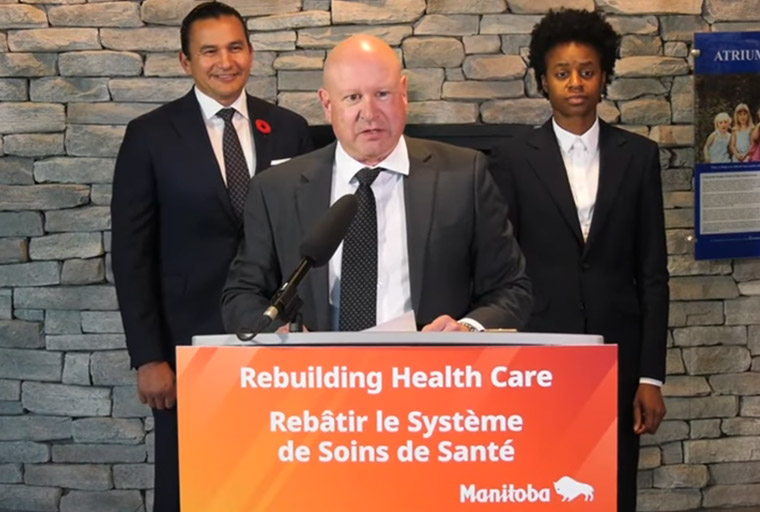
The Office of the Chief Provincial Public Health Officer has released the 2025 Health Status of Manitobans Report, A Healthier Manitoba for All, prepared by Dr. Brent Roussin.
The report is complementary to the 2024 Regional Health Authorities (RHA) Indicators Atlas, a comprehensive data study recently released by the Manitoba Centre for Health Policy (MCHP) at the University of Manitoba, Health, Seniors and Long-Term Care Minister Uzoma Asagwara announced.
Together, the reports provide a clear picture of Manitobans’ health, where progress is emerging and where long-standing inequities still require attention.
“These reports make it clear that good health starts long before someone walks into a clinic or hospital,” said Asagwara. “Manitobans are living longer, but not everyone is benefiting equally. That’s why our government is taking action on the most important drivers of health, from school nutrition to prenatal supports, so every person has a fair chance to live a healthy life. We are committed to using this evidence as a roadmap for building a fairer, more equitable health-care system.”
The reports also highlight positive trends:
- Child-care affordability is improving, with parents’ average daily fees dropping to $8.10 in 2024-25 from $20.70 in 2020-21.
- Access to regulated child-care spaces for children under five years of age has increased to 32.3 per cent from 26.2 per cent.
- Young people are making healthier choices, with alcohol use among students in grades 7 to 12 declining to 21 per cent in 2023-24 from 32.1 per cent in 2014-15.
- Long-term indicators such as heart attack and stroke rates are also improving.
At the same time, the data shows disparities in preventable disease, access to care and chronic conditions that continue to affect low-income and rural Manitobans.
“Effective health policy is a shared responsibility that extends beyond the boundaries of the health-care system,” said Roussin, chief provincial public health officer. “Governments, communities, organizations and individuals all play a role in shaping Manitobans’ health and well-being. By working together, we can reduce health disparities, improve outcomes and build a stronger, more equitable province.”
The reports re-inforce the importance of a health-in-all-policies approach, recognizing decisions across government directly affect health outcomes. This work is reflected in initiatives such as the expansion of the school nutrition program, enhancements to the prenatal benefit, community-based diabetes prevention supports and co-ordinated efforts aligning housing stability, income supports and access to services with health goals.
These initiatives demonstrate how co-ordinated policy and strategic investment help prevent illness, reduce demand on the health-care system and improve quality of life, the minister noted. The RHA Indicators Atlas provides regional and system-level data to support this work.
“While many health indicators have improved, some areas remain concerning, including rising rates of diabetes and a recent decline in prenatal care participation,” said Lindsey Dahl, epidemiologist, MCHP, who led the RHA Indicators Atlas report. “Demographics, environment, accessibility, as well as Manitoba’s growing and aging population all influence these trends and must be considered as demand for care continues to rise.”
To read the 2025 Health Status of Manitobans Report , visit: gov.mb.ca.