
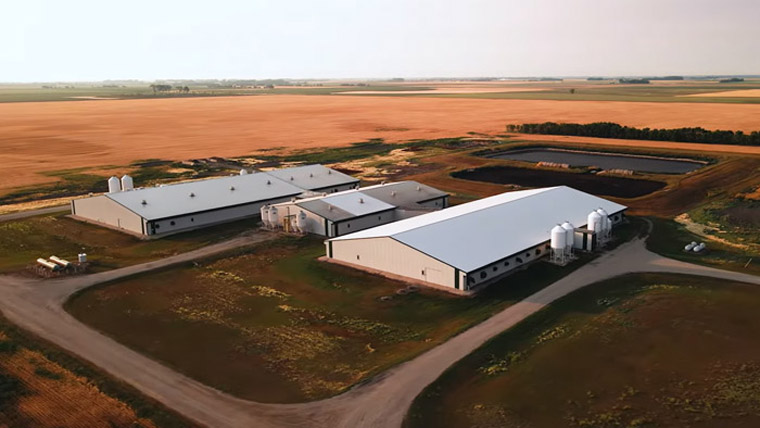
A partner with Polar Pork says the ability to move pigs and pork duty-free across North American borders as the result of free-trade has benefited pork producers and consumers in all three countries.
On July 1st the United States declined to extend the Canada-United States-Mexico Agreement triggering annual reviews and opening the option for any of the participants to end the deal with six months notice.
Florian Possberg, a partner with Polar Pork, says there’s a lot of value-added pork products that trade back and forth and, in some cases, parts of the hog that are slaughtered in Canada and processed in the United States are sold into Canada and vice versa.
It has allowed products, whether live hogs or meat, to trade freely across the border. For example, Mexico imports a lot of hams. Without the Mexican market, our ham price would probably be 30 percent lower than what it is now, just because Mexico uses a lot of hams in their Mexican food and they just simply don’t produce enough. That’s a product that in Canada and the United States is not highly valued.
So that’s just an example of how free trade is added to the bottom line of American and Canadian producers having this Mexican market. At the same time, Mexico does not produce enough hogs to meet that demand so their consumers in Mexico get a real value-lowered price product that they really desire. So, our producers benefit and their consumers benefit. It’s kind of a good deal for all three countries.
~ Florian Possberg, Polar Pork
Possberg notes U.S. pork producers have been very supportive of a free trade deal and are lobbying senators, congressmen and their trade negotiators making the case that they want to continue doing business with Canada and Mexico.