
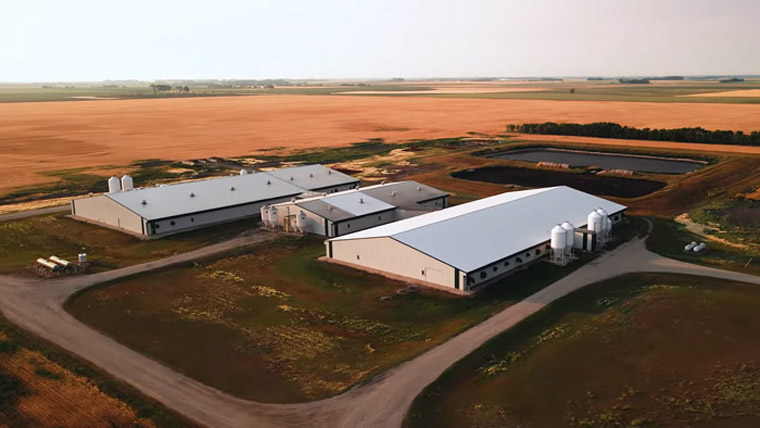
A partner with Polar Pork says the continued movement of pigs and pork across North American borders benefits both pork producers and consumers.
On July 1, 2026, the United States declined to extend the Canada-United States-Mexico Agreement (CUSMA) for a 16-year term triggering annual reviews and opening the option for any of the participants to end the deal with six months notice.
Florian Possberg, a partner with Polar Pork, says open trade is critical to the success of his operation and those of his American and Mexican counterparts.
A major part of our business is selling small pigs into Iowa and Minnesota and South Dakota. We have an advantage in health to produce baby pigs here and they have an advantage in the Midwest with corn and soy meal, probably the best ingredients possible to finish out hogs. And they have a multitude of very large scale, very competitive slaughter plants, literally miles away from their farms rather than, in our case in Canada, provinces away. So, they have an advantage in finishing hogs. We have an advantage producing baby pigs. It’s a really nice model when we can work together.
So, for our farm, it’s very important, but it goes beyond that. There are a lot of parts of the hogs that, once they’re actually slaughtered, the product moves all three ways. That really does add value to every hog that’s produced in North America. So, this whole idea of a free trade is really important to our industry, not only in Canada but Mexico and the United States as well.
~ Florian Possberg, Polar Pork
Possberg notes a lot pork moves back and forth across borders for processing which adds value to the product and makes it available to the total North American population, whether in Canada, the United States or Mexico.