
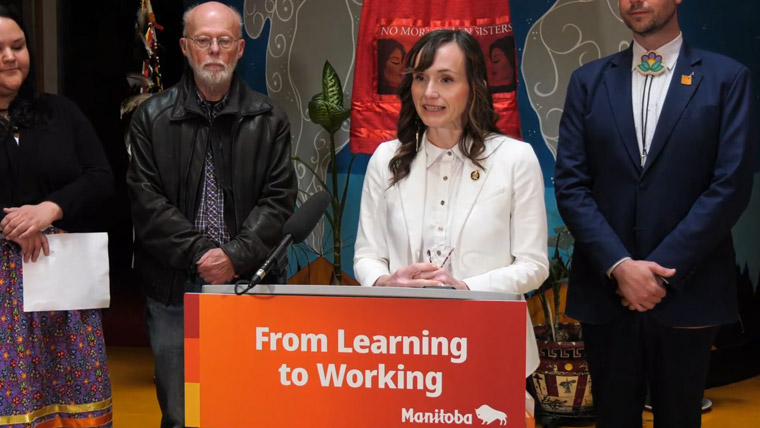
The Manitoba government is investing an additional $2.5 million to strengthen and expand adult education programming, including $1 million dedicated to First Nations and Northern communities, bringing the total funding for adult learning and literacy to $24.9 million.
“An investment in adult learning and literacy is an investment in Manitoba’s economy and in our people,” said Advanced Education and Training Minister Renée Cable. “We have heard from the community about the impact that adult learning and literacy programs have. We are supporting Manitobans to obtain high school credits and diplomas and improve basic literacy and numeracy skills to help them find good jobs to lift their families out of poverty and increase the chances their children will go on to graduate.”
The additional $2.5-million investment will stabilize and strengthen existing adult learning and literacy programming in priority communities, support front-line delivery needs and support recruitment and retention of professionals to deliver quality programming, the minister noted.
“Strengthening adult learning and literacy programs is a smart economic investment for Manitoba,” said Cable. “When adults gain the skills and credentials they need, businesses can fill in‑demand jobs, productivity increases and local economies grow. This funding will help ensure Manitoba has a skilled, adaptable workforce that supports long‑term economic growth across the province.”
The Manitoba government is also providing an additional $100,000 through the Mino’Ayaawag Ikwewag: All Women Doing Well strategy to support 60 Indigenous women enrolled in the Early Childhood Education, Adult Education and Employment, and Family Support Worker programs at Urban Circle. The funding will enhance programming by further incorporating ancestral teachings, traditional ceremonies and land-based learning opportunities, Cable noted.
“Indigenous women deserve access to education and training opportunities that are culturally safe, empowering and rooted in community,” said Families Minister Nahanni Fontaine, minister responsible for women and gender equity. “Access to Elders, Grandmothers and land-based learning in a safe and welcoming environment will open doors to future success. Through this investment, our government is supporting Indigenous women to strengthen connections to culture, complete their education and step into leadership roles in their families and communities.”
“Urban Circle has been delivering an Indigenous model of education for 36 years that has created educational and employment opportunities for thousands of Indigenous adult learners and their families,” said Haven Stumpf, executive director, Urban Circle Training. “We’re thrilled to be included in the Manitoba government’s announcement today, and congratulate Premier Wab Kinew and his ministers on their support for adult education in our province and for recognizing the central place of ancestral teachings and ceremonies in the success of Indigenous learners.”
Adult learning is an important learning pathway that advances reconciliation and supports learners to engage in further education and training or move directly into the workforce, the minister noted, adding that the Manitoba government worked closely with community partners to ensure programs reflect local needs and deliver strong outcomes for learners and employers alike.
“Adult learning centres play a critical role in reducing poverty and creating real opportunity for people who have been shut out of education and the labour market,” said Jim Silver, professor emeritus, University of Winnipeg, and adult education advocate. “This investment recognizes that when we support adults to complete high school, build literacy and numeracy skills, and gain confidence in their abilities, we strengthen families, communities and Manitoba’s economy as a whole.”
Budget 2026 takes concrete steps to make life more affordable and lift Manitobans out of poverty, including removing the PST from all food sold at grocery stores and freezing the price of one litre of milk in 2026, resulting in the lowest price per container in Canada.